
In today’s connected world, protecting your files is no longer optional. Photos, financial records, passwords, and work documents are valuable digital assets that deserve proper security. Following Data Backup Best Practices helps you avoid unexpected losses caused by cyberattacks, accidental deletion, or hardware failure. A smart approach combines backup strategy, cloud backup, data protection, automatic backup, and data recovery into one reliable system. Whether you use a laptop, smartphone, or tablet, creating multiple copies of your important files ensures peace of mind. In 2025, strong backup habits are essential because your digital life is just as valuable as your physical belongings.
Our lives now exist in two places. One is the physical world. The other lives inside phones, laptops, and online accounts. Family photos, tax records, work documents, and passwords have become valuable digital assets. A single accident can erase years of memories in minutes. That is why data backup best practices are no longer optional.
In 2025, smart users follow a solid backup strategy instead of relying on luck. A proper plan combines local backup, cloud backup, and data protection techniques to reduce risk. Whether you use a Windows PC, a Mac, or a smartphone, understanding modern backup systems can save you from costly mistakes.
Why Data Backup Is More Important Than Ever in 2025
Modern technology makes life easier. However, it also creates new risks. Cybercriminals, accidental deletion, theft, and hard drive failure can destroy your files without warning. Strong data protection methods help secure photos, videos, and financial records while improving overall data security.
Americans now store more information than ever before. Banking apps, cloud accounts, and smart devices all contain sensitive data. Good data loss prevention practices and a reliable backup solution ensure that you can recover important files even after a disaster.
Data loss does not always come from hackers. Sometimes a laptop falls off a desk or a phone disappears during travel. According to the source material, even experienced users have lost years of work because of drive problems.
Businesses and families need protection from multiple threats at once. Fire, flooding, ransomware, and device damage can happen unexpectedly. A modern computer backup plan reduces stress and creates a dependable path toward disaster recovery.
| Common Threat | Possible Result | Backup Benefit |
| Hardware failure | Lost files | Fast recovery |
| Ransomware | Locked data | Clean restoration |
| Accidental deletion | Missing documents | File recovery |
| Theft | Device loss | Remote access |
| Natural disaster | Total damage | Off-site recovery |
Understanding the 3-2-1 Backup Rule
The foundation of modern data backup best practices is the 3-2-1 backup rule. The concept is simple. Keep three copies of your files on two different storage devices and store one copy in a separate location. This approach improves data redundancy and minimizes risk.
For example, you might keep the original files on your laptop, save a second copy on an external hard drive, and place a third copy in an online backup service. This combination creates a balanced backup infrastructure that protects against both physical and digital threats.
Imagine that your laptop suddenly stops working. Your local drive becomes unreadable because of hard drive failure. Since you also use remote storage, you can still access your documents from anywhere. This extra layer of off-site backup protection prevents a small problem from becoming a major crisis.
The source recommends keeping multiple backups in physically separate places because backup systems can fail too. Having both a local and remote copy offers the best balance between cost and security.
| Rule Component | Example |
| Three copies | Original plus two backups |
| Two media types | Laptop and external drive |
| One off-site copy | Cloud storage |
How to Create a Personal Backup Plan Step by Step
Every successful backup strategy starts with organization. Begin by identifying your most valuable files. Photos, videos, contracts, tax forms, and passwords deserve special attention. Your backup management process should focus on protecting these critical records first.
Next, decide where those files will live. Some users prefer digital storage devices at home while others trust cloud storage providers. The best approach usually combines both methods. A mixed system increases reliability and strengthens your overall recovery plan.
After choosing storage locations, create an automatic backup routine. A good backup schedule removes human error from the process. According to the source, the best backup system works automatically in the background without requiring constant attention.
Finally, test everything. Backup verification matters just as much as creating copies. Try the restore process at least once every few months. If you cannot restore your files, your backup is incomplete regardless of how advanced the technology looks.
| Step | Action |
| Step 1 | Identify important files |
| Step 2 | Choose storage locations |
| Step 3 | Enable automation |
| Step 4 | Test recovery |
| Step 5 | Review regularly |
Different Types of Data Backup Methods Explained
Not all backups work the same way. A full backup copies everything at once. An incremental backup saves only files that changed since the last backup. Differential backups sit somewhere in the middle. Each method offers a different balance between speed and storage space.
Many modern backup software platforms rely on backup automation to run these tasks automatically. Choosing the right method depends on your storage capacity, internet connection, and personal needs. Understanding these differences is a key part of effective data backup best practices.
The following table explains the major backup methods in simple terms:
| Backup Type | How It Works | Main Advantage |
| Full backup | Copies all data | Maximum protection |
| Incremental backup | Saves changes only | Saves storage |
| Differential backup | Saves changes since last full backup | Faster recovery |
| Mirror backup | Creates an exact copy | Easy access |
A complete backup system often combines several methods. For instance, a weekly full backup paired with daily incremental updates creates strong backup retention and efficient file backup performance. This strategy also speeds up the restore process when problems occur.
Many backup tools save space by copying only modified files instead of everything again. The source explains that incremental systems reduce storage requirements while still maintaining protection.
System Image Backup vs File and Folder Backup
A system image backup creates a complete copy of your operating system, applications, settings, and personal files. Think of it as a digital snapshot of your entire computer. If your device crashes, this backup can restore everything exactly as it was before the problem occurred. For users who depend on their computers for work, this type of computer backup offers powerful disaster recovery capabilities.
A file backup, on the other hand, focuses only on selected folders and documents. Photos, videos, spreadsheets, and PDFs can be copied without saving the whole operating system. This method uses less space and speeds up the restore process. Many people combine system image backup and file backup methods to create a stronger backup strategy.
| Backup Type | What It Saves | Best For |
| System image backup | Entire computer | Complete recovery |
| File backup | Selected files and folders | Daily protection |
| Hybrid backup | System and personal data | Maximum safety |
Choosing between these options depends on your needs. If your computer contains business software and custom settings, a system image is the safer choice. However, if you mainly want to protect family photos and documents, a regular file backup may be enough. The best backup solution often combines both methods to improve data recovery and long-term data protection.
Modern backup software allows users to schedule both types automatically. This approach improves backup management and reduces the risk of losing important files during unexpected system failures.
Local Backups vs Cloud Backups: Which One Is Better?
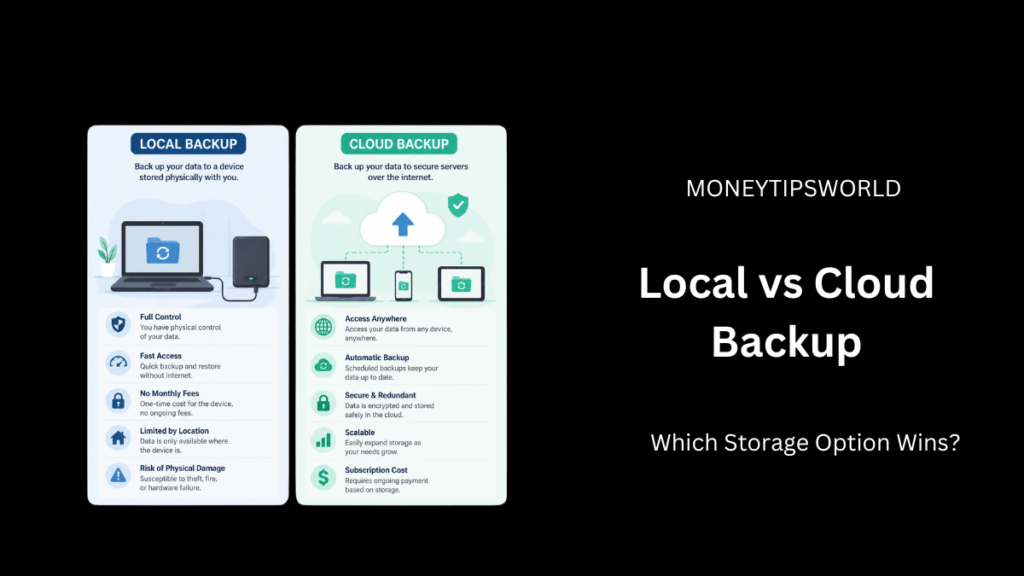
A local backup stores your files on physical storage devices such as an external hard drive, USB drive, or network server inside your home. The biggest advantage is speed. You can recover large files quickly without depending on the internet. Local storage also gives you complete control over your digital storage environment.
A cloud backup stores copies of your files in secure data centers operated by cloud storage providers. This type of off-site backup protects your data even if your home suffers damage from fire, theft, or flooding. Strong backup encryption and advanced data security features make cloud systems increasingly popular in the United States.
The source emphasizes that users should maintain both local and remote copies because physical devices can fail unexpectedly. Having an off-site backup ensures that your files survive even after major disasters.
| Feature | Local Backup | Cloud Backup |
| Speed | Fast | Depends on internet |
| Cost | One-time purchase | Monthly subscription |
| Accessibility | Home only | Anywhere |
| Security | User controlled | Provider controlled |
| Protection | Limited | Excellent |
The smartest approach is to combine both methods. An external hard drive handles daily backups while an online backup service protects your files from large-scale disasters. This combination improves data redundancy, strengthens your recovery plan, and supports long-term data loss prevention.
The source also warns that simple file synchronization services are not true backups because corrupted files can spread across every connected device through file synchronization.
Best Devices and Tools for Backing Up Your Data
Choosing the right tools is a critical part of data backup best practices. Physical storage devices such as portable drives and home servers remain popular because they offer affordable storage. Many users rely on SSD and HDD storage combinations to balance speed and capacity. SSDs deliver faster performance while traditional hard drives provide more space at a lower price.
Software matters just as much as hardware. Good backup software automates your backups, monitors file changes, and simplifies the restore process. Reliable backup automation reduces human error and ensures that important files are protected every day.
| Device or Tool | Main Benefit |
| External hard drive | Affordable storage |
| SSD | Fast performance |
| HDD | High capacity |
| NAS server | Shared home storage |
| Online backup service | Off-site protection |
The source recommends buying the largest drive you can reasonably afford because modern backups continue to grow over time. Incremental systems save space, but users still need extra capacity for future data.
Popular cloud storage providers and online backup service platforms also offer advanced features such as version history, backup retention, and secure remote storage. These tools allow users to recover older file versions after accidental changes or ransomware attacks.
How Often Should You Back Up Your Data?
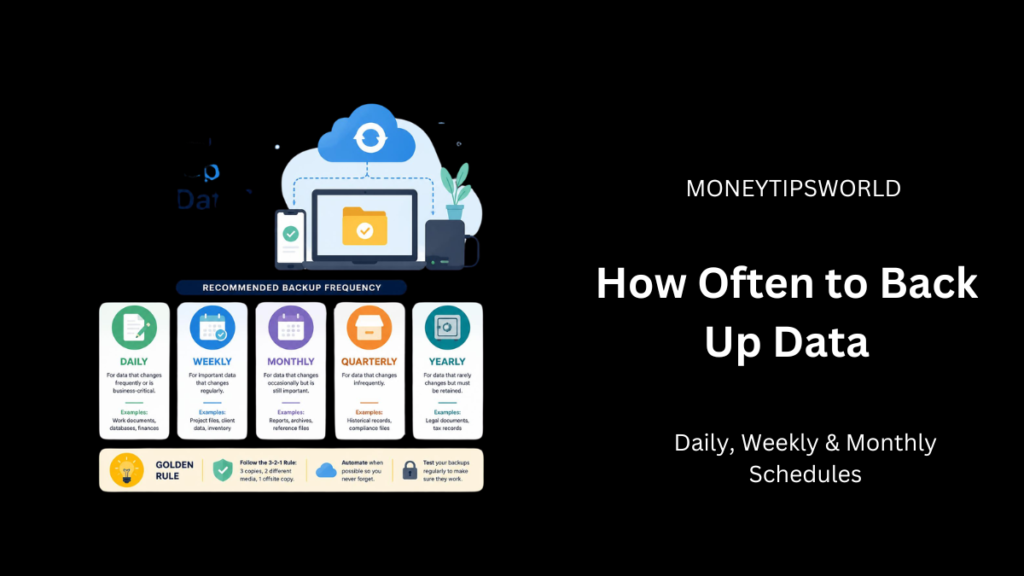
The correct backup frequency depends on how often your files change. A freelance designer who edits projects every day needs a different plan than someone who only stores family photos. Most experts recommend an automatic backup every day for important documents and a complete system backup at least once a month.
A reliable backup schedule should match your lifestyle. Financial records, work files, and personal documents deserve more frequent protection than temporary downloads. Frequent backups improve data recovery and reduce the amount of information lost after an accident.
| File Type | Recommended Backup Frequency |
| Work documents | Daily |
| Family photos | Weekly |
| Financial records | Daily |
| System files | Monthly |
| Downloads | Weekly |
The source explains that backups should happen automatically because manual systems are often forgotten. Good backup automation ensures that users stay protected without needing to remember every step.
Common Data Backup Mistakes to Avoid
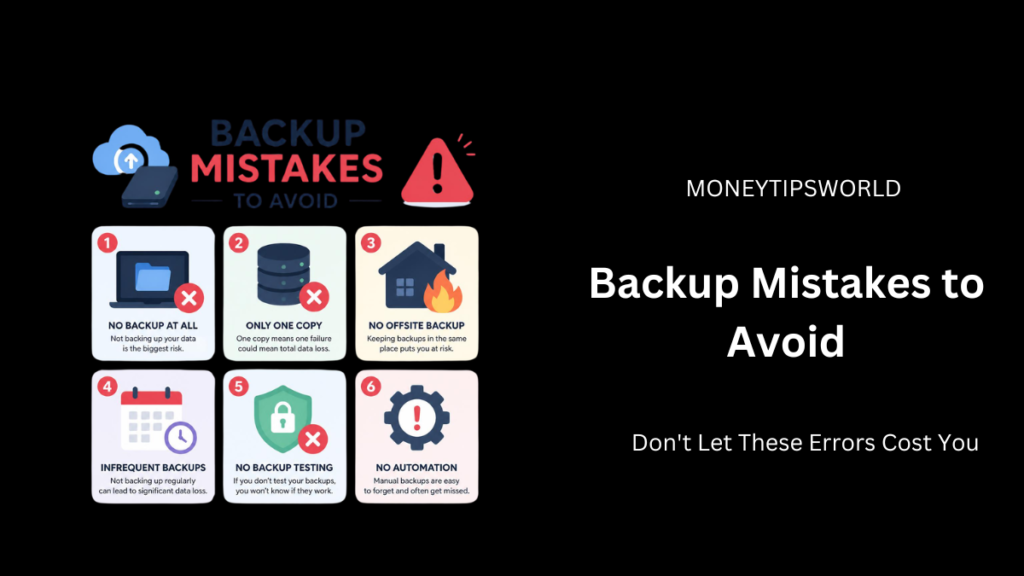
Many people spend money on expensive tools but still ignore basic data backup best practices. One of the biggest mistakes is relying on a single copy of your files. An external hard drive can fail without warning, and a stolen laptop can erase years of memories in seconds. Without data redundancy, your digital life remains vulnerable.
Another common problem is neglecting backup verification. People often assume their backups work without testing the restore process. The source clearly states that a backup system cannot be trusted until you successfully restore your files at least once.
| Mistake | Consequence |
| Using one backup only | Permanent data loss |
| Ignoring backup tests | Failed recovery |
| Skipping updates | Outdated files |
| Confusing sync with backup | Corrupted data |
| No backup schedule | Missing documents |
Users also confuse file synchronization with true backups. According to the source, cloud-sync platforms copy changes across devices, including corrupted files, which means synchronization alone is not a complete backup system.
Finally, many people forget important folders. The source mentions that even the Downloads folder can contain valuable documents that disappear after a system crash. Good backup management means protecting every file that matters.
Advanced Backup Security Tips to Protect Your Digital Life
Creating backups is only half the job. Protecting those backups is equally important. Strong backup encryption prevents criminals from accessing sensitive information if a device is stolen. Pairing encryption with two-factor authentication improves data security and makes your cloud backup much safer.
Modern threats such as ransomware continue to evolve. Effective ransomware protection requires multiple layers of defense, including off-site backup, secure passwords, and a tested recovery plan. A single security measure is never enough in today’s digital world.
| Security Measure | Benefit |
| Backup encryption | Protects sensitive files |
| Two-factor authentication | Blocks unauthorized access |
| Off-site backup | Protects against disasters |
| Antivirus software | Detects threats |
| Recovery testing | Confirms backup quality |
The source recommends practicing the restore process before an emergency occurs. Testing helps users discover problems early and strengthens overall disaster recovery planning.
Security experts also recommend separating your backup locations. Keep one local backup at home and one copy in remote storage. This combination improves data loss prevention and ensures that your information survives fires, theft, and hardware failures.
Final Thoughts: The Best Backup Strategy for 2025
The most effective backup strategy in 2025 combines speed, convenience, and security. A mixture of local backup, cloud backup, and the 3-2-1 backup rule gives you multiple layers of protection. There is no perfect system, but using several methods together dramatically reduces risk.
Strong data backup best practices are not about buying the most expensive technology. They depend on consistency. A reliable backup schedule, secure backup software, and regular backup verification create a system that protects your digital life for years to come.
The source emphasizes that the ideal backup system is the one that fits your habits and works automatically in the background. A backup that you never forget is always better than a complicated system you never use.
Your photos, documents, and memories deserve protection. Start with one extra copy today. Then expand your system over time. Future you will be grateful.
Conclusion
Modern life depends on reliable data. Family photos, financial records, and work projects all deserve protection. Following proven data backup best practices helps you avoid expensive mistakes and gives you peace of mind.
Build a system that combines automatic backup, cloud backup, and secure storage devices. Protect your files today so that tomorrow’s problems become minor inconveniences instead of major disasters.
FAQ’S
What is a backup routine?
A backup routine is a regular schedule for copying and saving your important files to prevent data loss. It can be daily, weekly, or automatic.
What is a digital backup?
A digital backup is a copy of your data, such as photos, videos, and documents, stored on another device or in the cloud.
What is the 3/2/1 rule for backing up?
The 3-2-1 rule means keeping three copies of your data on two different storage devices, with one copy stored off-site.
What is the 3-2-1-1 rule?
The 3-2-1-1 rule adds one extra layer of protection by keeping one backup copy offline or immutable to defend against ransomware attacks.
What are four types of backups?
The four main types of backups are full backup, incremental backup, differential backup, and mirror backup. Each method offers different levels of speed and storage efficiency.

I am Waseem, the founder of MoneyTipsWorld and a dedicated technology expert. With a passion for the digital space, I specialize in delivering honest software reviews, actionable tech guides, and vital online security insights. My goal is to simplify complex tech concepts so everyday users can make smart, informed decisions.