
Will Mortgage Rates Drop in 2026? Here’s the Truth Nobody Wants to Say Out Loud
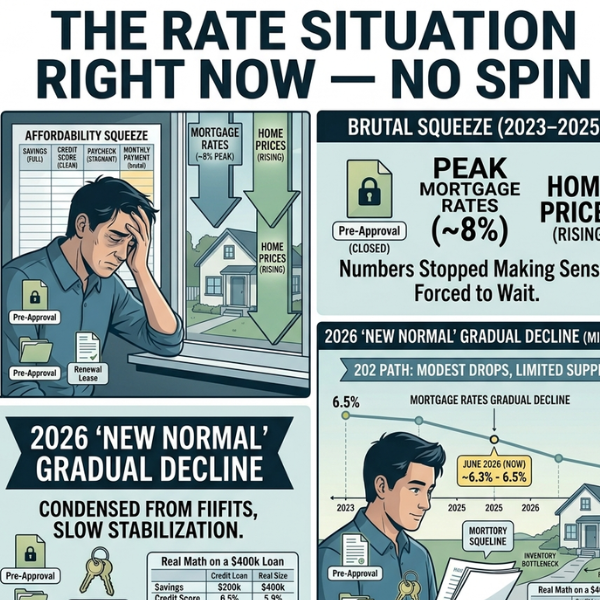
I’m just going to say it — the last few years have been brutal if you were trying to buy a home. Not inconvenient. Not challenging. Brutal. You did everything the financial advice articles told you to do. You cut back on eating out, skipped vacations, stacked your savings account, kept your credit score clean. You were ready. And then the market laughed in your face.
Rates went up. Then prices went up. Then both went up at the same time while your paycheck stayed roughly the same. Every time it looked like things were finally cooling off, something else would happen — an inflation report, a Fed announcement, some global crisis nobody saw coming — and suddenly the window slammed shut again.
I talked to a friend last year who had been house hunting for almost two years. She had the down payment. She had the pre-approval. She just couldn’t make the monthly numbers work without essentially giving up every other financial goal she had. So she renewed her lease again. She’s not alone. There are millions of people exactly like her, sitting on the sidelines not because they’re unprepared but because the math genuinely stopped making sense. Mortgage Rates
So here we are in 2026. Is it finally getting better? Sort of. But let me be real with you about what “better” actually looks like right now. Mortgage Rates
The Rate Situation Right Now — No Spin
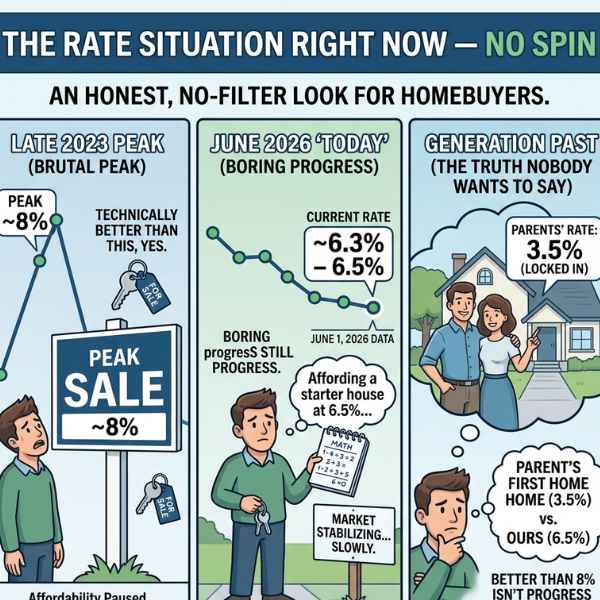
At the start of this year there was real momentum. The 30-year fixed rate briefly dipped under 6% and for about five minutes it felt like the corner had been turned. Buyers started calling agents again. Lenders got busy. People started making offers. Mortgage Rates
Then inflation didn’t cooperate and oil markets got weird again and rates climbed right back up. Today you’re looking at somewhere between 6.3% and 6.5% on a standard 30-year loan. Not the end of the world, but not comfortable either — especially when home prices haven’t dropped a single dollar to compensate. Mortgage Rates
Here’s the thing that gets me though. In late 2023 we were sitting at nearly 8%. Eight percent. So by that comparison, yes, things are genuinely better. But when your parents casually bring up the 3.5% rate they locked in on their first home while you’re sitting there doing mental math on whether you can afford a starter house in a decent school district, “better than 8%” doesn’t exactly feel like progress worth celebrating. Mortgage Rates
What Experts Are Saying — And What They’re Leaving Out
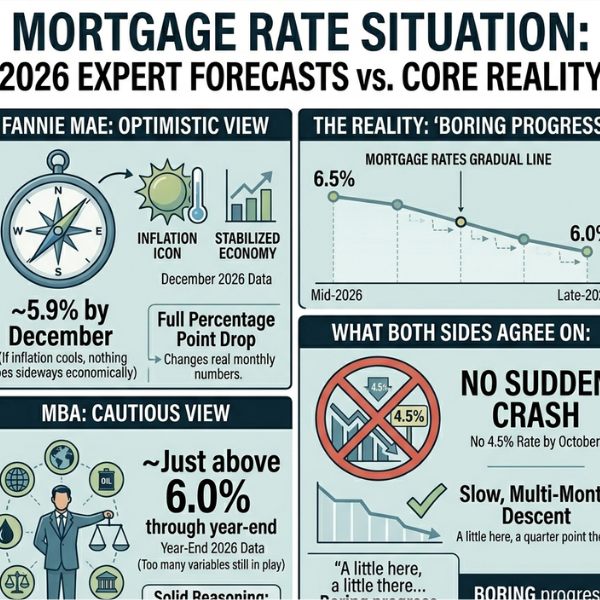
Most analysts will tell you rates are heading lower. Fannie Mae thinks we could see something close to 5.9% by December if inflation keeps cooling and nothing goes sideways economically. That would genuinely help. A full percentage point drop changes real monthly numbers for real people.
The Mortgage Bankers Association is less optimistic. Their position is basically that rates are going to stay stubborn, probably staying just above 6% through the end of the year. And honestly their reasoning is solid — there are too many variables still in play for anyone to confidently call a fast drop. Mortgage Rates
Here’s what both sides agree on and what I think matters most: nobody is expecting a sudden crash in rates. There’s no version of reality where you wake up in October and mortgages are sitting at 4.5%. What’s actually going to happen — if things go well — is a slow, almost boring decline. A little here, a little there, over many months. Not exciting news. But for someone buying a $400,000 home, boring progress is still progress. Mortgage Rates
Why Rates Aren’t Falling Faster
This drives people absolutely crazy and I get it. The Fed cuts rates and mortgage costs barely move. What’s going on?
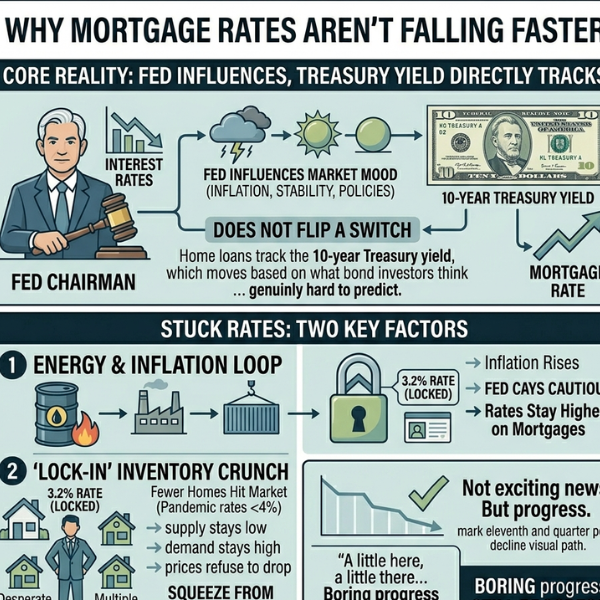
Here’s the thing most people don’t know: your mortgage rate isn’t directly controlled by the Federal Reserve. Home loans track the 10-year Treasury yield, which moves based on what bond investors think is going to happen with inflation, government spending, global stability, and about fifteen other things that are genuinely hard to predict. The Fed influences the mood of the market but it doesn’t flip a switch.
Two specific things are keeping rates stuck right now.
First, oil. When energy prices spike, the cost of manufacturing and shipping and basically everything else goes up with it. Businesses pass that cost onto consumers. Inflation creeps back up. Mortgage Rates And when inflation is above target, the Fed stays cautious because the last thing they want to do is cut rates too early and restart the whole inflationary mess we just spent years fighting. So expensive oil directly translates into a higher rate on your mortgage. Most people never connect those dots but the connection is real.
Second, and this one is genuinely frustrating, is the inventory problem. A massive number of existing homeowners locked in rates below 4% during the pandemic. Those people are not moving. Why would they voluntarily give up a 3.2% mortgage to take on a 6.5% one? They’d rather stay put forever. So fewer homes hit the market, Mortgage Rates supply stays low, demand stays high, and prices refuse to drop. Buyers end up competing for a small pool of homes at high prices while also dealing with high rates. Both problems at once, feeding each other, with no obvious short term fix.
What the Numbers Actually Mean for Your Wallet
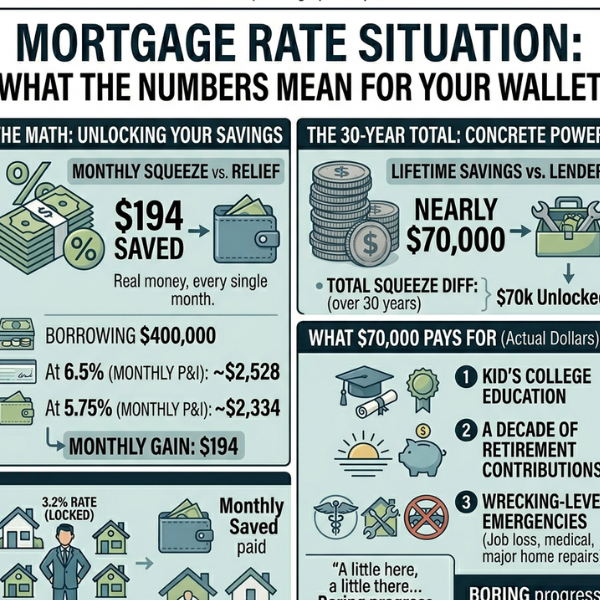
Let me put something concrete in front of you because I think people read rate percentages and their eyes glaze over.
You’re borrowing $400,000. At 6.5% your monthly principal and interest payment is roughly $2,528. If rates drop to 5.75% — which is a realistic possibility within the next several months — that payment falls to about $2,334.
That’s $194 every single month staying in your bank account instead of going to your lender. Mortgage Rates
Over thirty years that difference is nearly $70,000. Not theoretical money. Actual dollars that could pay for your kid’s college. Fund a decade of retirement contributions. Mortgage Rates Cover the kind of emergencies that wreck people financially — job loss, medical bills, major home repairs. A fraction of a percent on a mortgage sounds like nothing until you do that math.
Should You Buy Now or Keep Waiting?
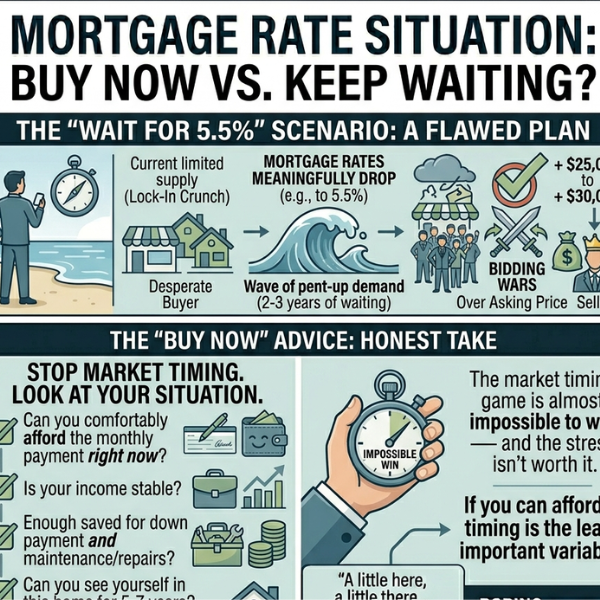
Okay this is the question everyone actually wants answered and I’ll give you my honest take.
Waiting for rates to drop is a reasonable strategy right in theory. In practice it has a serious flaw. Mortgage Rates The moment rates drop meaningfully — let’s say they hit 5.5% — every single buyer who has been waiting on the sidelines for two or three years floods back into the market simultaneously. Mortgage Rates That’s an enormous wave of demand hitting a market that still has limited supply. What happens next is predictable: bidding wars, offers over asking price, sellers suddenly having all the power again. You saved a little on your interest rate and paid an extra $25,000 or $30,000 for the house because you were competing against a dozen desperate buyers.
The only scenario where waiting pays off cleanly is if prices stay flat while rates fall. That’s possible. It’s just not the way this market has historically behaved.
What I’d actually tell a friend is this: stop staring at rate charts and start looking honestly at your own situation. Mortgage Rates Can you handle the monthly payment right now without destroying every other financial goal you have? Is your income stable? Do you have enough saved not just for a down payment but for the costs that come after — repairs, maintenance, the random expenses homeownership throws at you? Is this a home you could genuinely see yourself in for at least five to seven years?
If those answers are yes, then honestly the rate environment is probably the least important factor in your decision. Mortgage Rates The market timing game is almost impossible to win and the stress of playing it isn’t worth it.
Practical Moves That Actually Help
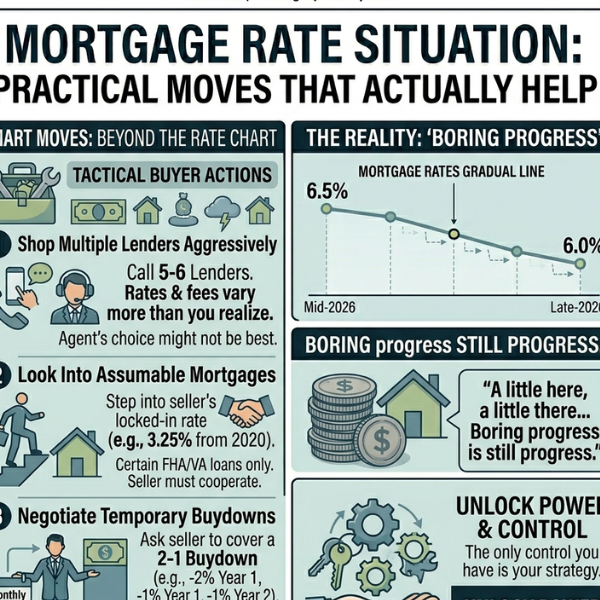
Stop applying to just one lender. Seriously. Call five or six of them. Rates and fees vary more than most buyers realize and that difference over thirty years is not small. Your real estate agent’s preferred lender might not be offering you the best deal.
Look into assumable mortgages. This is a strategy most buyers completely overlook. Mortgage Rates With certain FHA and VA loans you can actually take over a seller’s existing mortgage at the rate they originally locked in. If someone bought their house in 2020 at 3.25% and is now selling, you could potentially step into that loan. Mortgage Rates It requires the right circumstances and the seller’s willingness to cooperate but it’s absolutely worth asking about on every single offer you make.
Ask the seller to fund a temporary buydown. A 2-1 buydown reduces your rate by 2% in the first year and 1% in the second year before settling at your actual rate from year three onward. In a market where sellers are motivated, a lot of them will agree to cover this cost. It eases you into the payment while you’re getting settled and rates hopefully keep drifting lower.
The Real Situation in Plain English
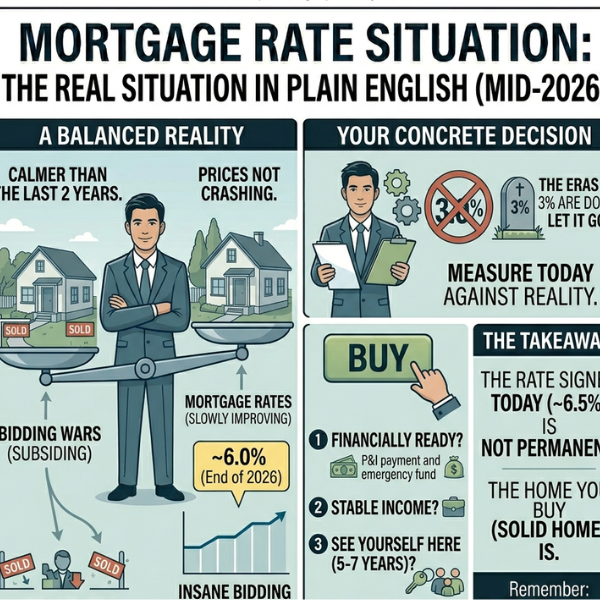
2026 is calmer than the last two years. Mortgage Rates That’s genuinely true. The panic and chaos of the 2022 and 2023 market has mostly settled. Rates are expected to keep slowly improving. Prices aren’t crashing but the insane bidding war environment is largely behind us.
If you’re holding out for 3% to come back, let it go. Mortgage Rates That era is done and the sooner you stop measuring today against it the clearer your thinking will get.
But if you’re financially ready — really ready, not just emotionally ready because you’re tired of renting — then stop letting market headlines make your decision for you. Find the right home for your actual life. Mortgage Rates Get the best rate available right now. And remember that rates can always be refinanced when conditions improve. Mortgage Rates

Your Partner in Financial Growth
Helping you save and invest smarter since 2026. Our mission is to simplify finance for everyone.